Northern Thai Food: 5 Local Favourites in Chiang Mai
If we talk about the Northern Thai Food, I’m pretty sure most of you have heard about or already have tasted Khao Soi; the egg noodle in coconut curry soup. As a Chiang Mai local, I’d like to expose you to more of the Northern Thai dishes. The dishes I will be introducing are local favorites that we often eat. They can be easily found in local markets or in any local restaurants serving northern-style dishes.
Local Chiang Mai's dishes got a lot of influences from our neighboring countries’ cuisines; e.g. Laos, China, and especially Myanmar. We, Chiang Mai locals, love cooking with complex mixes of different local ingredients and herbs. Apart from local herbs like ginger, galangal, fingerroot, or lemongrass, other ingredients can get as crazy as fermented soy beans, fermented fish, shrimp paste, or even crab paste. You will be also surprised that pork is used in all of the upcoming dishes. I’m not really sure why we adore pork so much but the most common meat used in cooking has always been pork. Moreover, we always prefer sticky rice to the steamed jasmine rice.
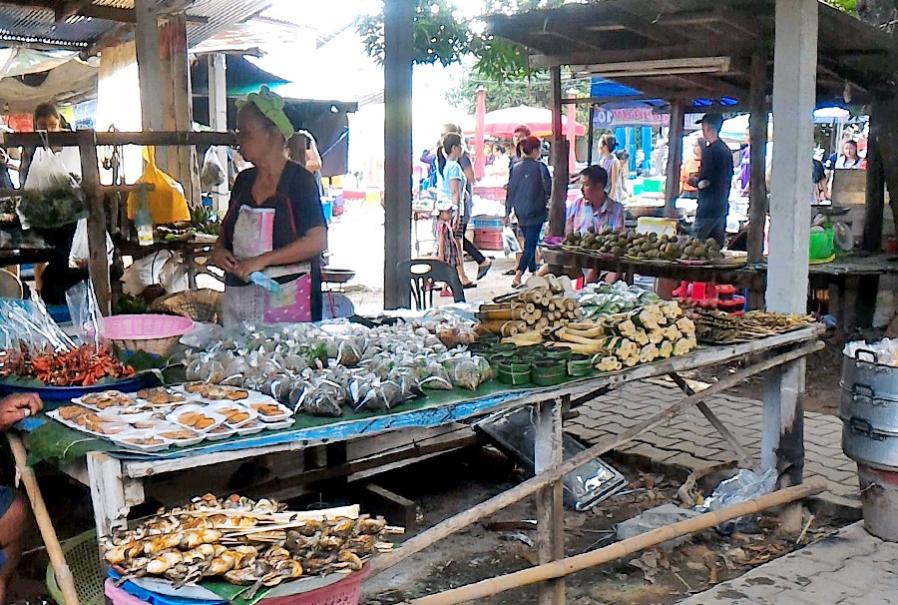
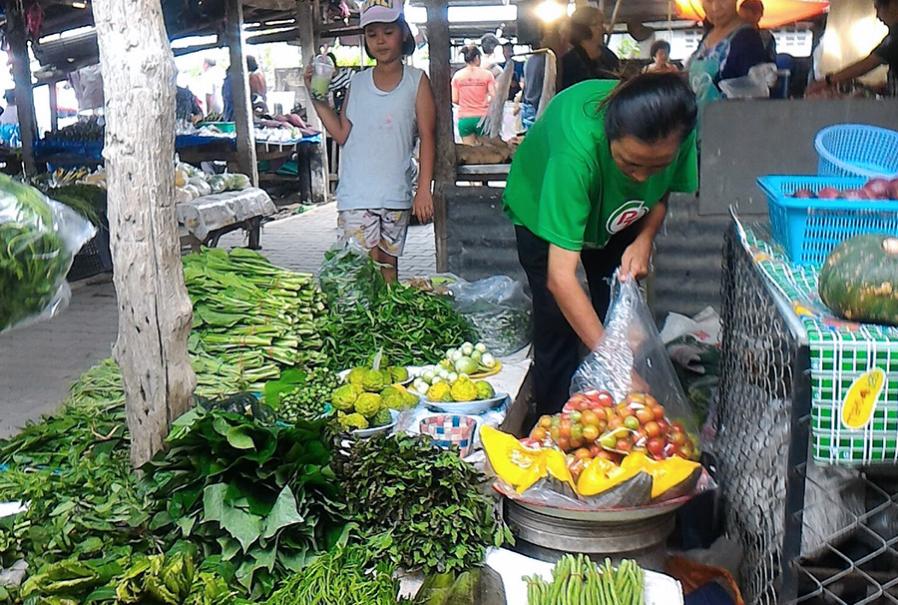
The Northern food is everything but sweet and coconut milk is barely used in any dishes. I am introducing you to five dishes; Laab Mu, Kanom Jeen Nam Ngiew, Nam Prik Ong, Gaeng Hung Lay, and Sai Ua. These are some of the local dishes I remember growing up eating them. Let me explain to you what the mentioned dishes with weird names are.
Laab Mu
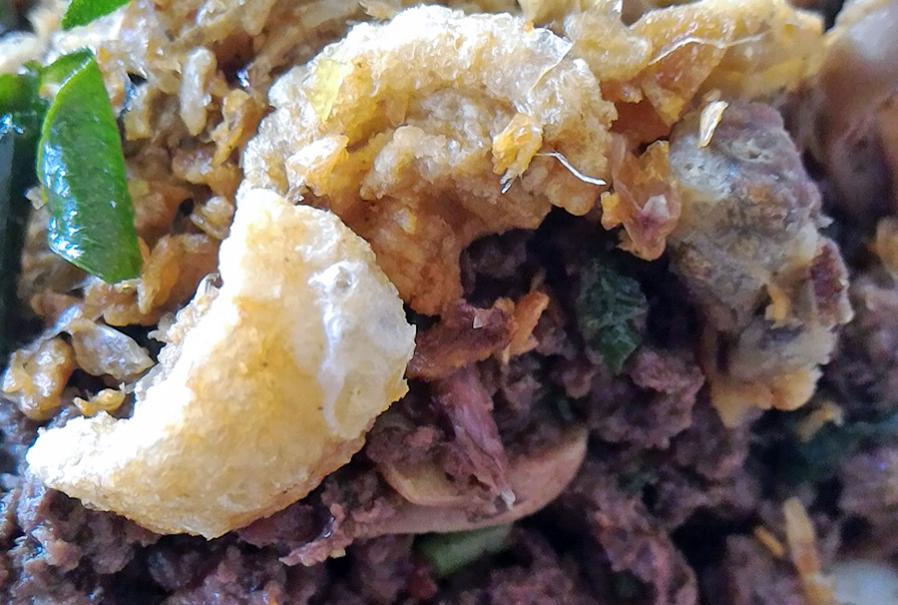
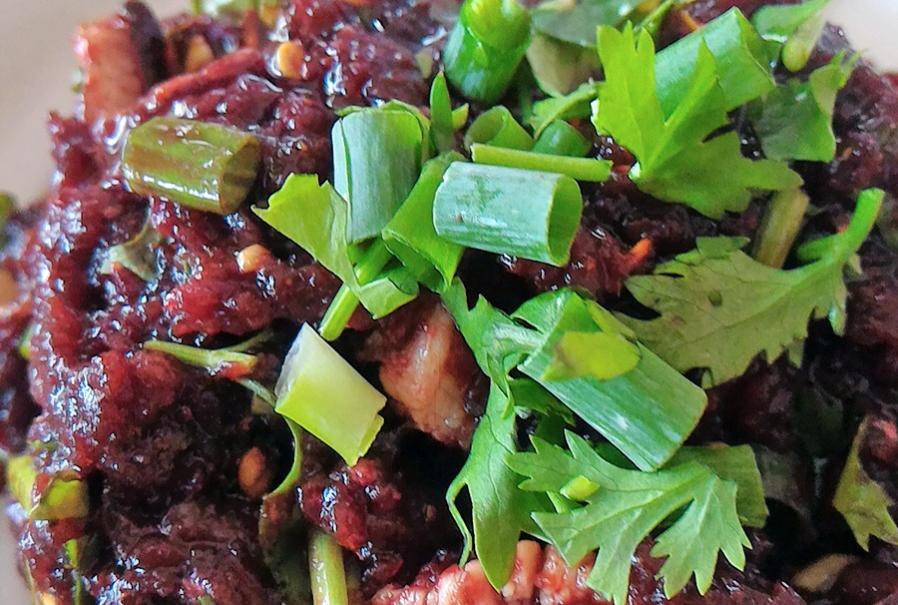
Laab Mu is one of the dishes that locals love the most. Back in the day, Laab Mu was considered as one of the very luxurious dishes. Long time ago, the lower to middle-class people were mainly farmers and they were quite poor. On the other hand, the price of the meat was quite high back then. So, to have a dish with meat as the main ingredient was something very fancy. You would find Laab Mu only at parties and special occasions. Even though nowadays Laab Mu has become a common dish, locals still love it.
Laab in Thai means a spicy finely minced meat salad with herbs. Mu in Thai means pork. So Laab Mu is a spicy finely minced pork salad with herbs. Laab is not limited only to pork. It can be made with any other kinds of meat; pork, chicken, fish, beef, or even water buffalo’s meat. In order to make some Laab Mu, you will need to mix the meat with ‘Prik Laab’ (roasted chilies with at least another ten different spices mixed especially for Laab). Apart from the Prik Laab, some fresh pig’s blood and some pig offal (livers, kidneys, and chitterlings) too will be added to complete the dish.
Laab Mu can be served raw or cooked. I think raw Laab it’s very similar to the steak tartare in the western world. This dish is quite intense in flavors and dark in colors. It’s mainly spicy and salty. We always eat Laab Mu with warm sticky rice served in small or big wicker baskets. Moreover, Laab Mu always comes with lots of fresh vegetables and strong-tasting fresh herbs like the chameleon plant, Vietnamese coriander, and culantro.
Kanom Jeen Nam Ngiew
Even though this dish can be often found alongside with Khao Soi in pretty much any Khao Soi stalls, it is a lesser known noodles dish in the North. Both Khao Soi and Kanom Jeen Nam Ngiew got a lot of influences from Burmese cuisine. For me, the Thai version of both items has more intense flavors than the Burmese version.
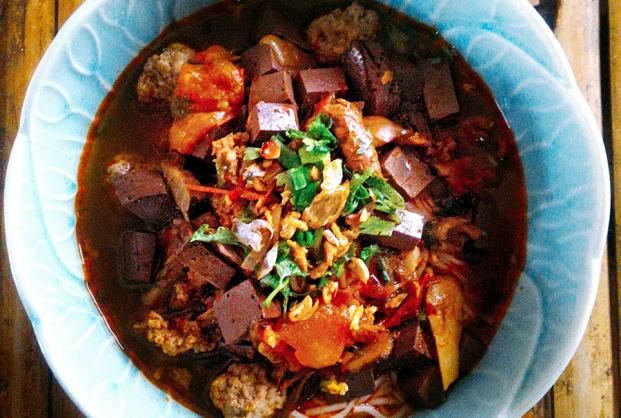
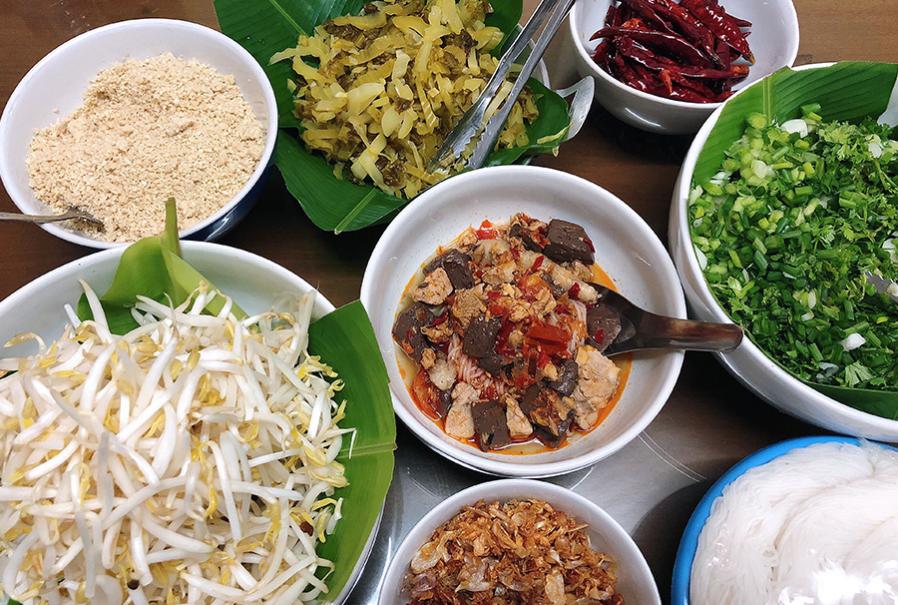
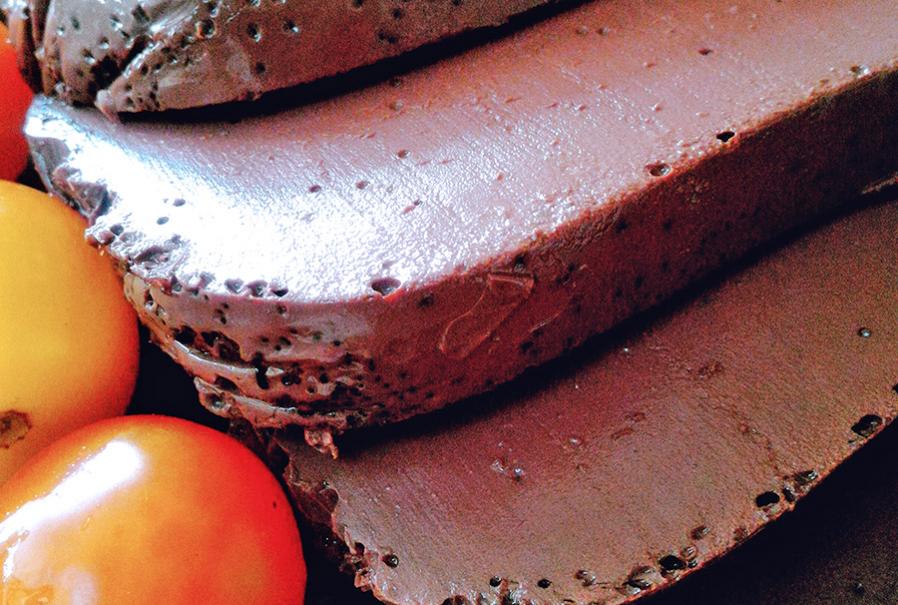
Khanom Jeen in Thai refers to fresh white rice noodles which are thin, sticky and jiggly. Nam Ngiew is a slightly spicy tomato-based soup with minced pork, chopped pork ribs, diced chicken blood jelly, and of course with lots of herbs.
This soup is served hot and poured over the noodles. It also comes with a lot of garnishes which are fried garlic, fried dried chilies, fresh bean sprouts, fresh chopped cilantro and spring onions, pork crackling, lime wedges, and pickled cabbage. Kanom Jeen Nam Ngiew is a little bit salty and spicy. It is light and bright in both flavors and colors.
Nam Prik Ong
Thai people have always been eating Nam Prik (chili paste or dip) with vegetables as a part of our daily meals for hundreds of years now. Even though there are probably almost one hundred recipes of Nam Prik throughout Thailand, Nam Prik Ong is one of Chiang Mai’s specialty Nam Prik.
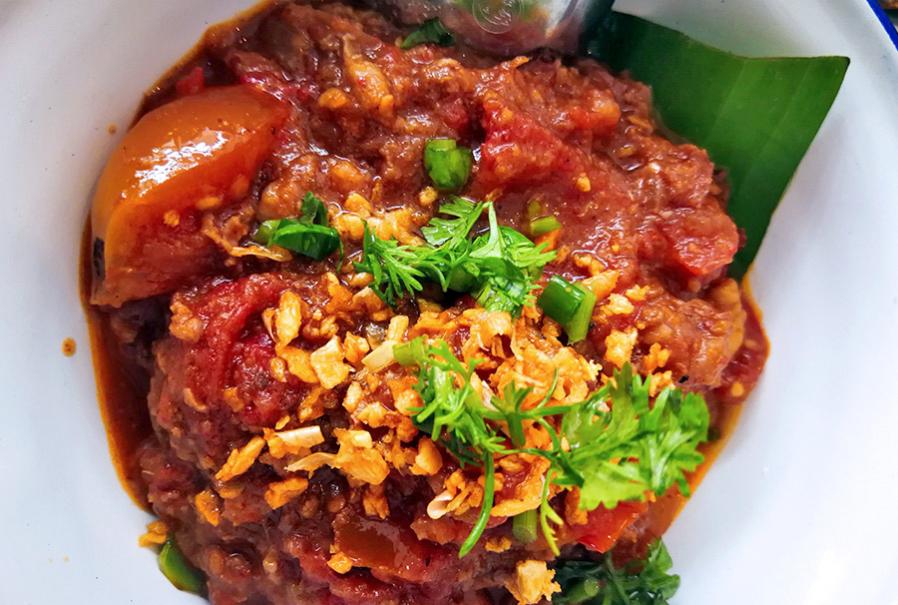
In Thai language, Nam means water and Prik means chilies, while Ong in northern dialect means a reduction in cooking. So Nam Prik Ong is a bowl of chili paste or chili dip that is thickened over the heat. Nam Prik Ong is mainly made of minced pork, dried chilies, cherry tomatoes, shrimp paste and herbs. When it’s cooked, Nam Prik Ong is spicy, tangy and a bit salty. It’s always red-ish in color which is from tomatoes and dried chilies. The type of dried chilies used will give the different shades of red color of the dish. To be honest, I always think Nam Prik Ong looks like the Bolognese sauce.
Nam Prik Ong is always paired with warm sticky rice and fresh or steamed vegetables and some pork crackling. You can dip the vegetables or the sticky rice balls into the bowl. Double dipping is allowed since it’s so good and you won’t be able to stop eating it!
Gaeng Hung Lay
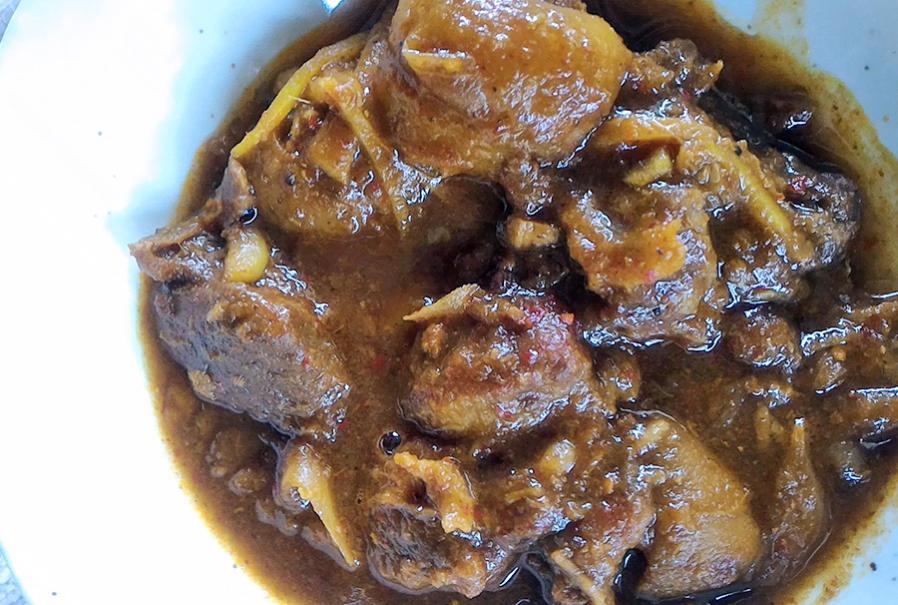
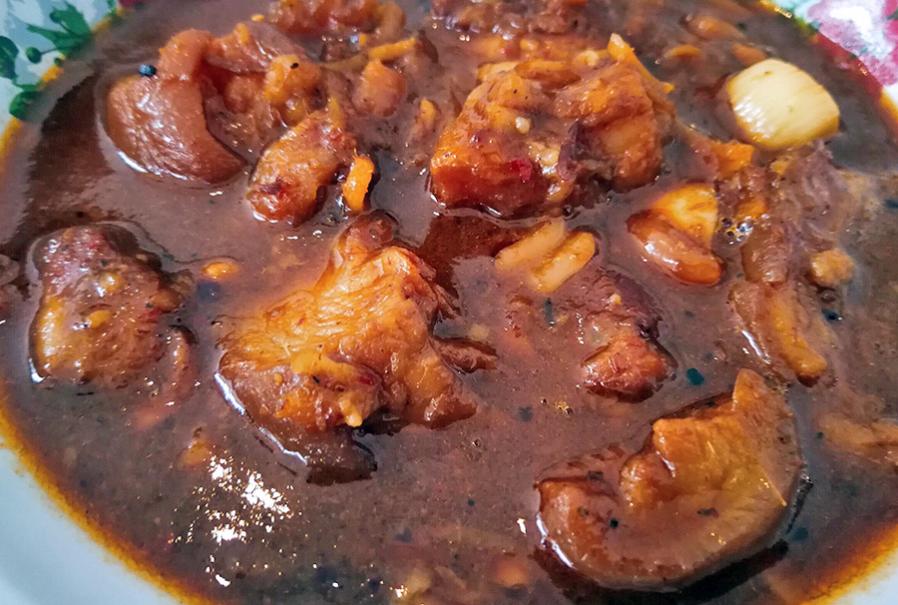
This dish is another locals’ favorite. Gaeng Hung Lay is a slow-cooked pork curry that has influence from Burmese cuisine. In Burmese, it’s called Hin Lay which means meat curry.
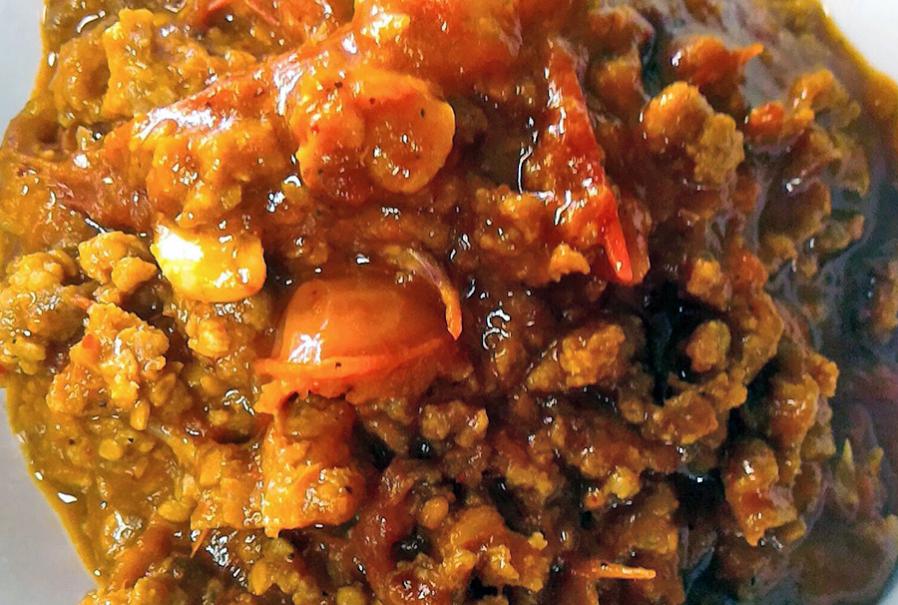
In Chiang Mai, we usually use pork belly for this dish since it is supposed to be oily. The shades of Gaeng Hung Lay can vary from yellow to orange to even red. The ranges of the shades depend on the amounts of turmeric, dried chilies, and herbs used. The curry sauce is usually thickened and intense by the time spent on cooking.
One of my aunts can really make Gaeng Hung Lay. I really like her version of the curry. My aunt’s Gaeng Hung Lay always has a little oil on the surface and with the tastes of the tangy sweetness against the spiciness and saltiness. The pork is always so tender. I always have to wait for a special occasion like a family reunion, a wedding of a family member or the Thai New Year to get to eat her Gaeng Hung Lay. She only does it once in a while since she spends at least 2-3 hours making this dish. Gaeng Hung Lay can be served with warm sticky rice or steamed rice with some julienned ginger sprinkled on top.
Sai Ua
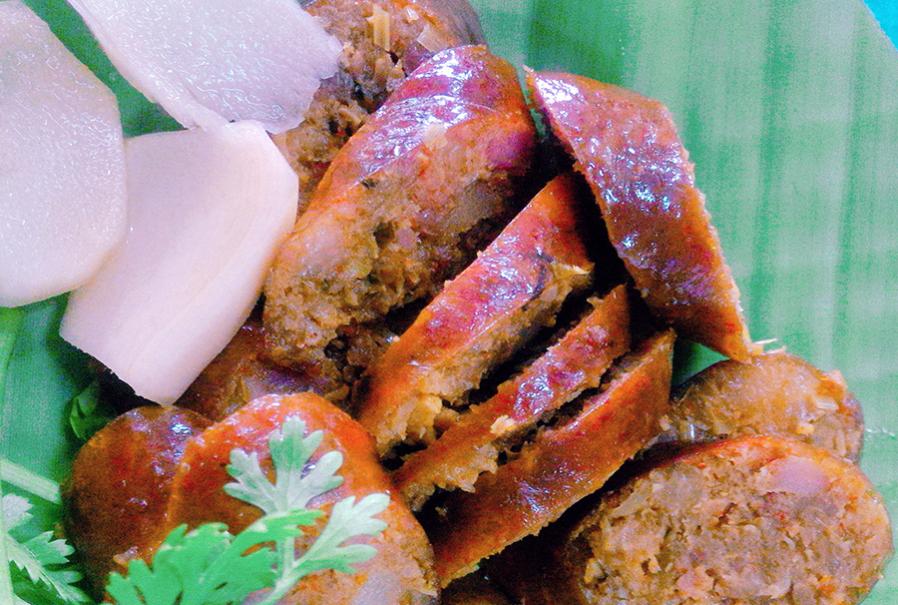
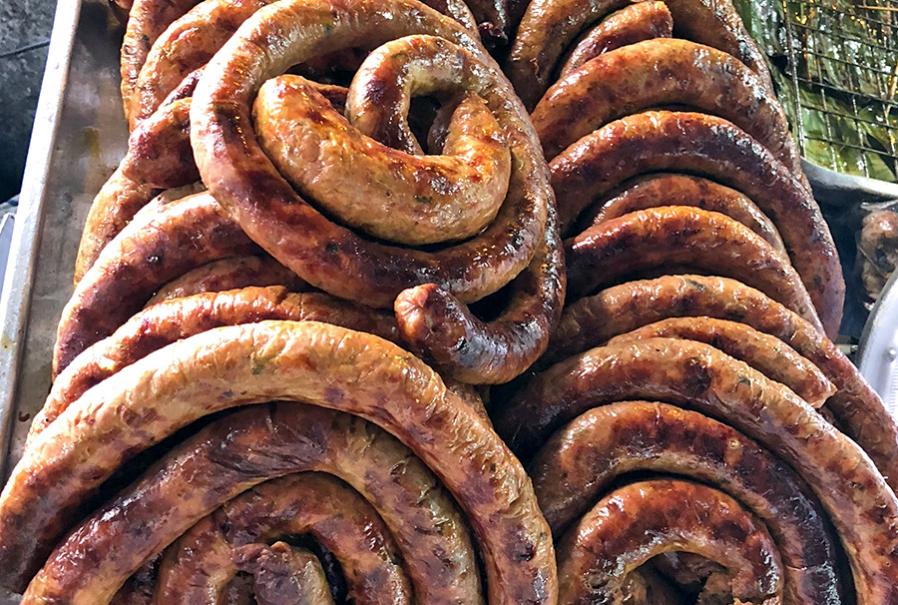
This herby sausage is another iconic item of Chaing Mai and that’s why people often call it Chiang Mai sausage. Sai in Thai refers to chitterlings. Ua in northern dialect is a verb which means to put or sneak something inside. So in this case, Sai Ua means stuffed chitterlings.
Chitterlings are used as the sausage casing and is stuffed with meaty and fatty minced pork mixed with lots of herbs. The fatty minced pork keeps Sai Ua moist after it’s cooked. The main herbs used in Sai Ua are dried chilies, galangal, kaffir lime leaves, turmeric, lemongrass and shallots. Then it’s grilled over the low fire on the BBQ. When it’s cooked, it should be crispy on the outside and the meat is soft and moist on the inside. It should be herby, juicy, spicy, and salty.
Sai Ua is again usually served warm and comes with warm sticky rice, that’s it. If you are scared that Sai ua will be too spicy to eat just by itself, I have a little tip for you: Make sticky rice and Sai Ua bruschetta. Just put a piece of Sai Ua on top of a flattened piece of sticky rice ball. The natural sweetness of the sticky rice will help reduce the heat from the chilies and other spices. You would never have thought that a wonderful meal in Thailand can be made of some sticky rice and a link of Sai Ua. Enjoy!