KL Daytrip to Mah Meri Cultural Village
If you have some time to spare while visiting Kuala Lumpur and would like to avoid the usual tourist spot, why not head over to Mah Meri Cultural Village (MMCV)? Located in Carey Island in Klang (about 1 hour drive from Kuala Lumpur city center), the visit will guarantee you an immersive cultural insight into the lives of the Mah Meri people.
One thing to note is that the centre is only fully opened during weekends and public holidays, between 9am to 6pm. During weekdays, you may contact the centre and request for group booking with a minimum number of 20 pax. While you can walk-in to the centre during its opening hour, it is highly recommended for you to book a package either with the official site or with other travel agents, in order to enjoy the full experience, that includes a guided tour and cultural show. Otherwise, the visit to the center alone may not be well worth it. Although, at an additional charge of RM10, you may enjoy a guided tour but that depends on the availability of the personnel.
We called the centre ahead of our visit and was informed that the centre has prepared the full package for a big group of visitors that have made a booking. We may tag them along at no additional charge (the package starts at RM60 upwards, and the entrance to the centre is at a modest fee of RM5)!
‘Mah Meri’ in native language means ‘the people of the jungle’. They are one of the 18 indigenous tribes living in Peninsula Malaysia. Believed to have originated from the southern of peninsular Malaysia while attempting to flee their enemies when the Sultanate of Johor fell apart, the nomadic seafarer settled in an island called Si Alang. During the early 1900s, an English planter named Edward Carey acquired the island from the Sultan of Selangor to start a rubber plantation. The plantation thrived and the island was renamed after the Englishman.
On your way to the centre, you can see acres after acres of plantation on each side of the road. There is altogether five Mah Meri villages still on the island. Most of them have assimilated into modern life, many hold jobs with the plantations and factories in the city nearby. Still, their ancient rituals and customs remain largely untouched, allowing us to get a glimpse into the unique way of life of the Mah Meri people.
It was 10pm when we arrived and already the heat from the sun is almost unforgiving. As we stepped out of our car, we were greeted with a calming and soothing sound. We noticed a Mah Meri tribesman at the entrance, a mallet in his hand, hitting a percussion-like musical instrument called ‘gong’ at a constant tempo. The vibrating sound from the ‘gong’ helped us forget about the heat for a while.

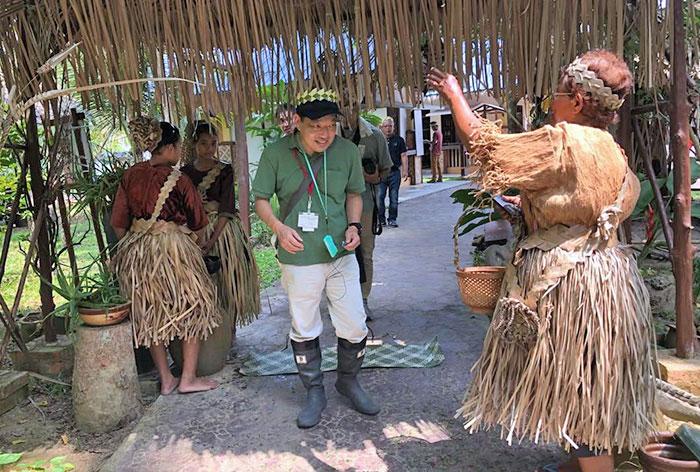
Two Mah Meri tribeswomen greeted us at the entrance with a little dance, accompanied by a tribesman donning their trademark wooden mask. My two toddlers were quite agitated by the masked man, but that just goes to show how intricate and surreal the mask looks. The sculptors often draw inspiration from the gods and spirits that the Man Meri people believe in. The masks are worn during the ceremonies and are sometimes, also used for spiritual healing.
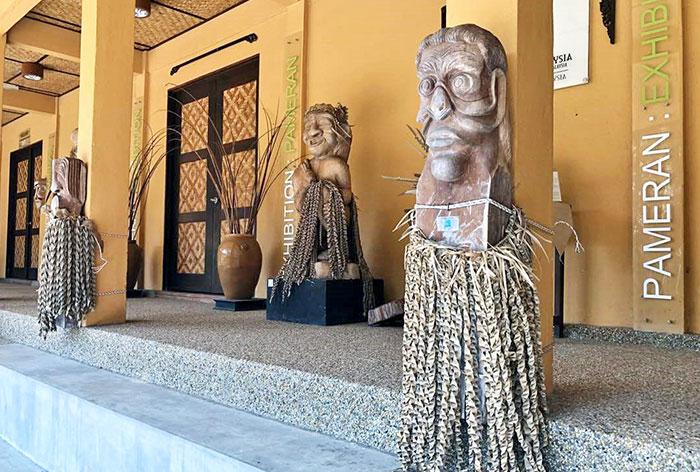
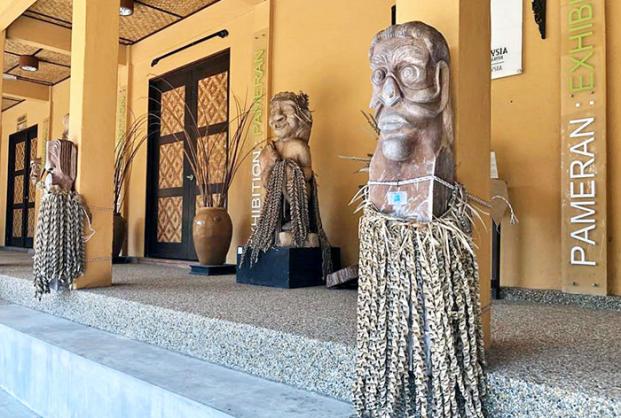
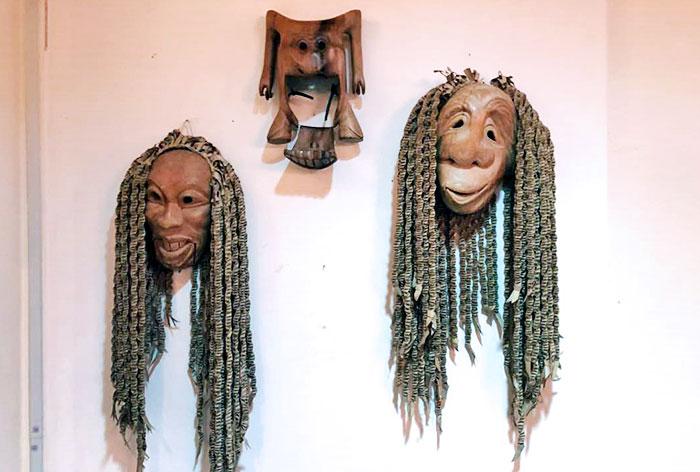
There is a gallery at the centre which displays 22 sculptures, including masks, that were awarded the Seal of Excellence by UNESCO. The crafts are made out of a rare, reddish mangrove hardwood found on the island called ‘nyireh batu’, giving the pieces a distinct red color. Art enthusiasts and collectors around the world have been known to pay upward of USD1,000 to own one of the sculptures made by the Mah Meri people. If you are looking to bring back a small piece of art to commemorate your visit here, there is a shop selling the handicrafts.
While the woodcarving is known to be a male’s arena, the Mah Meri tribeswomen are known for their skills in weaving. This can be seen from the skirt and their headdress, as well as the hair on the wooden masks. Each visitor was given a headdress to put on and and we were advised to keep it on during our entire stay, as a sign of respect.
Before entering the gallery and exhibition area, we partook in a traditional welcoming and cleansing ritual, which involved placing our feet on the woven mats made from ‘nipah’ leaves and having water sprinkled on our feet. Once that was done, ‘confettis’ made of dried flowers and leaves were thrown at us, to celebrate our visit.
From there, you can watch the sculptors working on their art pieces. A mask may take up to 3 weeks to complete, depending on the design. One can only imagine the amount work and passion behind each piece of the mask.
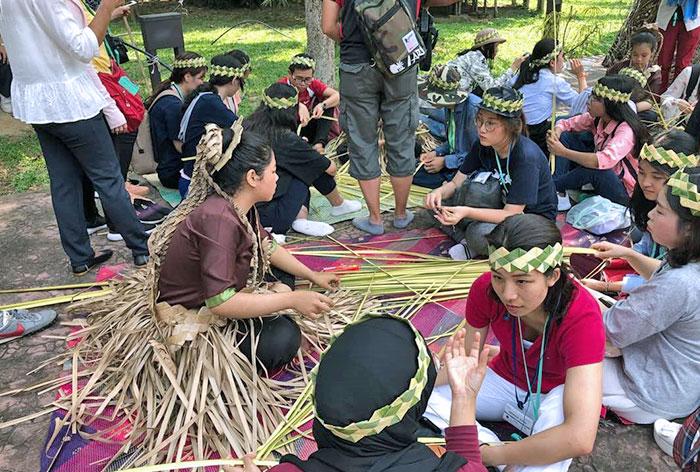
You can even try your hands at ‘nipah’ origami. The origami was mostly made to decorate the house and appease the spirits of the dead. If you manage to learn the craft, you get to keep the piece for yourself as souvenir.
To learn more about the history of the Mah Meri people, there is a gallery where you can enjoy a short movie. The gallery also showcases historical artefacts, such as the clothes, ‘sampan’, musical instruments, and tools used by the Mah Meri people.
It is worth noting that if your travel coincides with the two grand celebrations of the Mah Meri people - Puja Beach Ritual in February and Ancestor Day in March - you may want to book a package for this! To maintain sanctity of the celebration, places are very limited so you have to book well ahead.
All in all, a visit to the Mah Meri Cultural Village will definitely give you an appreciation to the unique culture of the people that has stood the test of time.