Cultures, Beliefs and Traditions of Bali
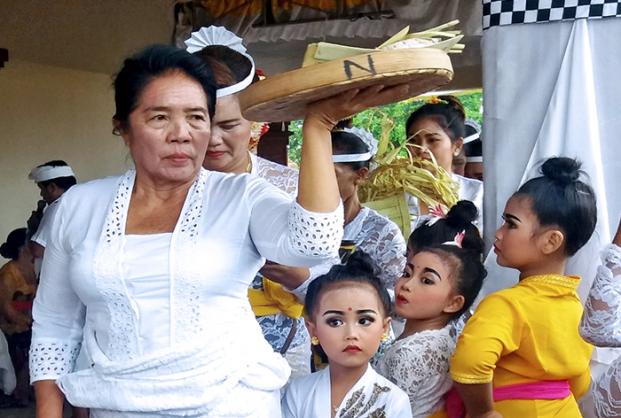
Bali is an endless festival - with more than 20,000 temples on the island and thousands of Gods to worship, there are always ceremonies to remind locals and visitors that life is meant to be celebrated.
Unlike any other place, Bali’s uncommon traditions and beliefs can be truly fascinating for the Western society. When you first visit Bali, the different customs you will see might be strange in the beginning. Here’s what uncommon traditions and foods I discovered during my four months journey here:
They respect both Good and Evil Spirits equally
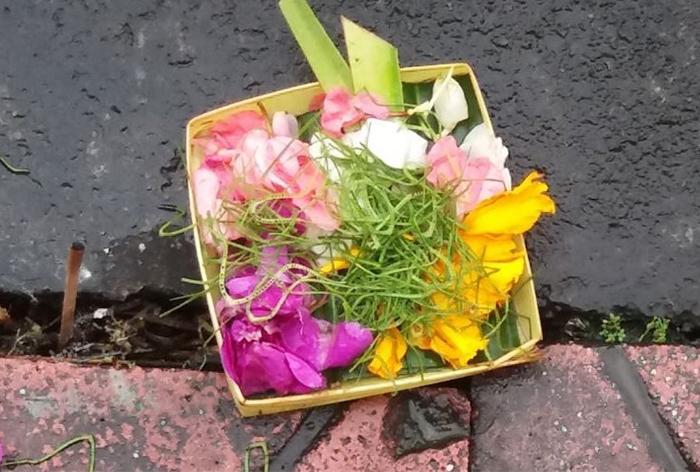
The Balinese believe we are surrounded by good and evil spirits, which must be shown equal consideration and respect. They think we should all live in peace and take a few hours each day to make hand-made offerings not only for the Gods, but also for the evil spirits. The offerings consist of various things even including cigarettes, candies or chewing gum, and you’ll see them at every doorstep, be it a restaurant, pub, or a local’s house. Every night at dawn, women light scented sticks and place the offering at the temple, or in front of the house.
They believe large trees are inhabited by Demons
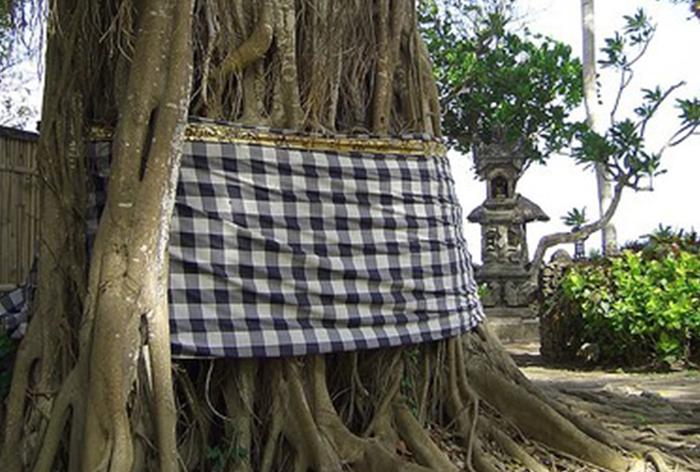
Another uncommon belief is that old and large trees are inhabited by spirits and demons. The base of large trees are often wrapped in black and white holy cloth, highlighting the cultural significance of this belief. The milk wood tree is thought to contain the spirit of Durga, the goddess of death. One fascinating habit Balinese have is to honk two times when driving past such trees, as a form of showing respect. Some tourists have started copying this habit in order to keep the bad spirits away.
Dharma vs Adharma, The Battle Between Good and Evil
When it comes to traditions, there are two main ceremonies Balinese celebrate - Galungan and Kuningan. It starts with Galungan and ends 11 days later with Kuningan, commemorating the triumph of Dharma over Adharma, or the good against the evil. On Galungan Day, the Balinese make offerings, decorate their houses and temples with penjors - large bamboo poles decorated with coconut leaves, fruits, seeds, tubers and coconuts which can be seen outside every house.
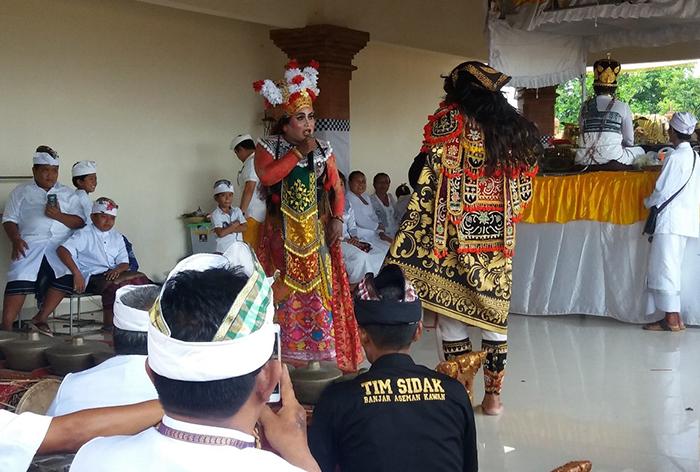
During these days, kids usually take to the streets wearing Barong masks. The Barong, mythological character, is the king of the spirits and leader of the hosts of good. Banas Pati Rajah is the spirit which animates Barong, representing the spirit child that accompanies the youth throughout life. I believe this is the reason why the mask is worn by kids only. During the Galungan Kuningan festivals, the kids wearing the Barong mask wander from door to door cleansing the territory of evil influences.
We were part of both Galungan and Kuningan ceremony, and it felt truly amazing to see these ancient traditions live. It is all interpreted like an act where disguised people have a conversation and engage with everyone at the temple. We were warmly welcomed in the temple even though we didn’t have the sarongs with us, and the locals made us feel as if we belonged to the community: asking us to come to the front and translating the ceremony to us.
The habit of applying few rice grains as well as wearing frangipani flowers when praying
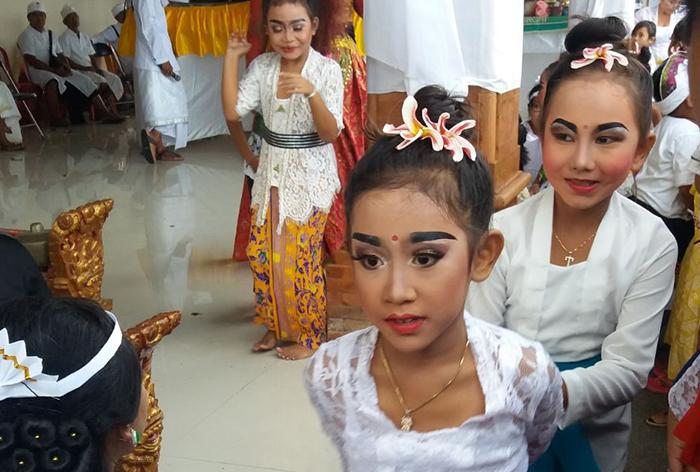
Rice grains are applied between the eyebrows, a very special place where energy is said to be concentrated, making up one of the human body’s 'chakras'. Placing rice on the forehead is believed to be good for fortune and prosperity. Women will also be seen wearing Frangipani flowers in the hair during or after prayer.
The frangipani flower has two important rules in Hindu religion: symbol of Siwa God and as a worship or prayer means. As a symbol of Siwa God, it placed on the corner of both palms hand and be included while worshipping. As a prayer means, the frangipani are also dedicated to the Gods or the holy spirits.
The Burial Ceremony Corpse in Trunyan
The Trunyan village follows a unique tradition of laying the deceased around Taru Menyans (Fragrant Trees), an ancient banyan tree. After it is cleansed with rain water, the body of the deceased is placed in a bamboo cage under the Taru Menyans tree until the forces of nature, in particular the wind, has dissolved the body tissues until only the skeleton remains. Then the skull is placed on a stairs-shaped stone altar which is located some 500 meters north of the Banjar Kuban, a special place which can only be reached by boat. The smell of the decomposing bodies is masked by the trees’ fragrance which makes the open display of the remains possible.
The Joy of Eating Nasi Goreng for Each Meal
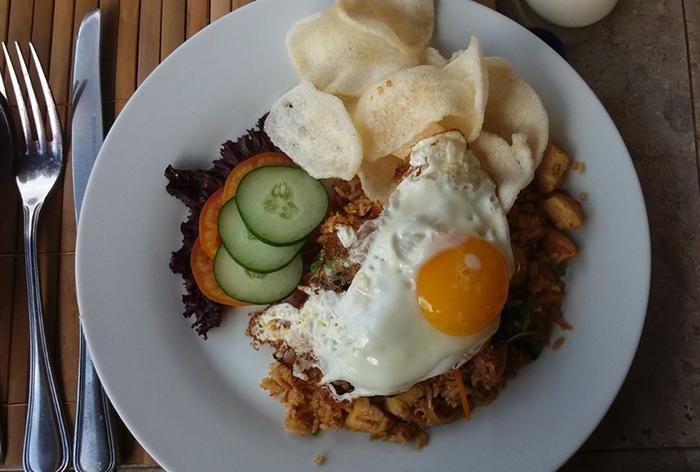
Nasi Goreng, meaning fried rice, is an Indonesia dish made of pre-cooked rice that is stir-fried with soy sauce and chicken or shrimp. This is the number one dish you will eat in Indonesia, one of the most delicious yet simple food you can eat on a budget. If you want to try Western foods here, just don’t. Balinese will prepare this special rice with all the love they have, and you’ll feel this at the first bite. You can also opt for Mie Goreng, which is fried noodles with chicken or prawn.
Next to Nasi and Mie Goreng you will see Babi Guling or suckling pig, which is also one of Bali’s most famous dishes. The pig is prepared in a very special way, and it doesn’t taste as you would expect. Stuffed and infused with a spicy mix of turmeric, lemongrass, garlic and coriander seeds and spit-roasted, this dish can be a delicacy for those who love spicy foods.
These are just a few of the traditions and celebrations that are commonly known. Bali is an amazing mystical land that is yet to be discovered in its pure and raw beauty.